AWS Fintech
Automation at Scale: Financial Deal Modeling
COMPANY
Amazon AWS
ROLE
Lead Designer
YEAR
2024
Timeframe
4 months
Project description
The ADAPT (Automated Deal Appraisal & Pricing Tool) redesign addressed critical challenges in P&L modeling for AWS Finance teams. The tool, initially built to support custom deal modeling, had grown increasingly cumbersome due to fragmented workflows and unmet user needs. The redesign aimed to restore user trust, improve workflow efficiency, and establish a scalable foundation for future enhancements.


Process & Solution
User Shadowing
Conducted user shadowing sessions with 20 participants across three personas, (deal modelers, deal managers, and deal approvers) to map pain points and validate assumptions.
Repaired Cross-functional Workflows
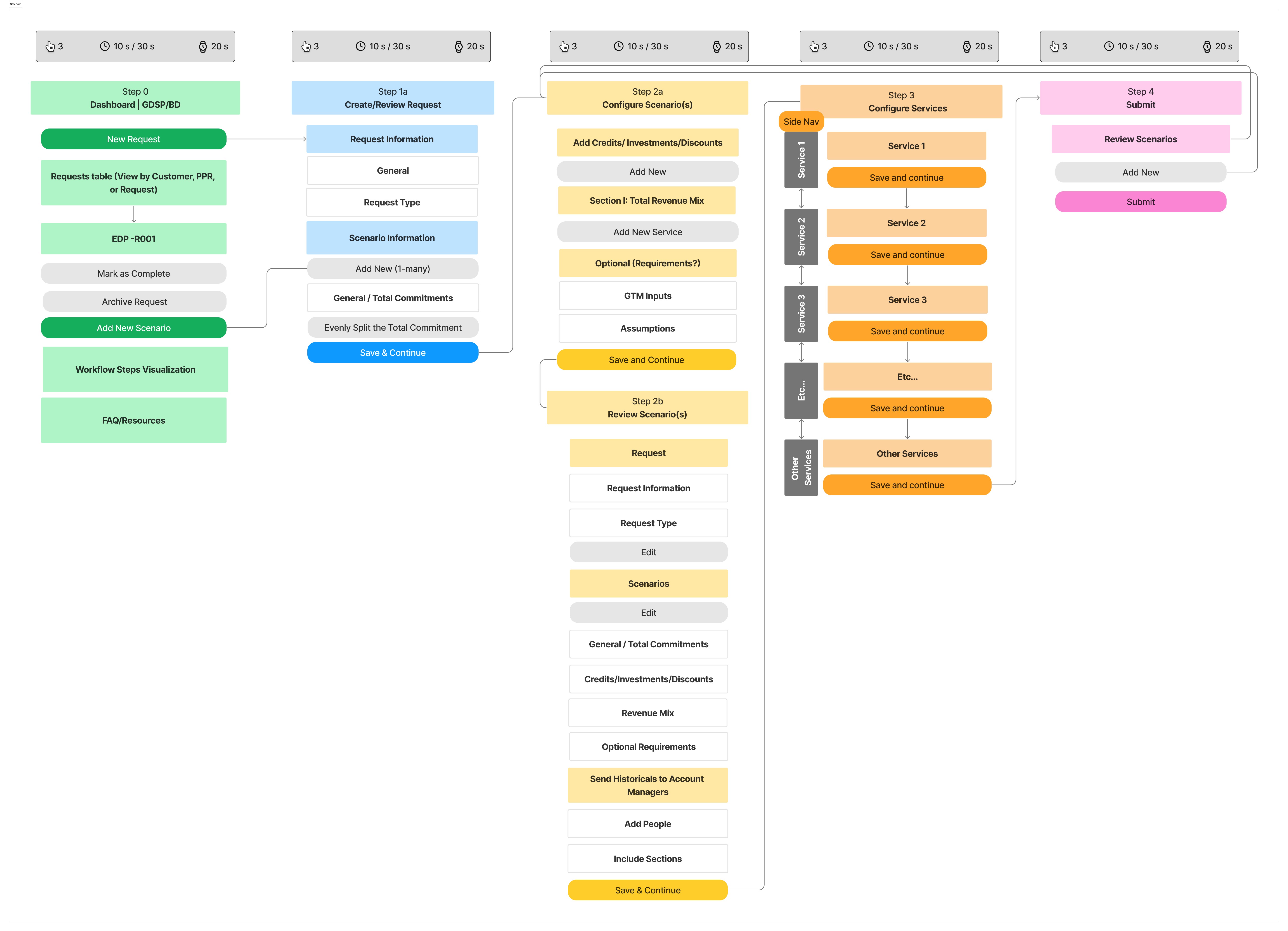
Introduced cross-functional connections to eliminate redundant steps, such as manual re-entry of data between deal managers and deal modelers, saving deal modelers 178 clicks.
Streamlined Use Cases
Implemented a Quick Analysis feature that enabled users to explore profit & loss models in minutes instead of requiring users to enter all deal information first, reducing clicks by 50%.
Scenario Comparison
Redesigned scenario management to allowed users to create, save, and compare multiple scenarios within a single deal while preserving historical data, improving decision-making efficiency.
Improved Data Input
Improved the ease of data input by introducing the new Data Grid table component that I built for AWS. It enabled Excel-like functionality, including copy-paste and downloadable templates, reducing data entry time by half.
Deal Status Visibility
Added a deal status page that provided visibility into deal progress with drag-and-drop approvals, reducing reliance on external tools like Slack.




Results & Learnings
Connected
Cross-functional Workflows
Easier Scenario Creation
Improved User Satisfaction
Enhanced workflows addressed users' top pain points, restoring trust among key stakeholders.
Foundation of Scalibility
The redesign established a scalable framework, integrating user-centered practices and modern design standards for future updates.
Promoted UX Value
Demonstrated the impact of user research and early cross-functional collaboration, securing leadership buy-in for UX as a strategic partner.
Organizational Impact
Formalized user shadowing as a standard practice within the product development cycle, creating a repeatable process for understanding user needs.